
Patellofemoral pain syndrome (PFPS), often called runner’s knee, is pain around or behind the kneecap that gets worse when a bent knee carries load. Running, stairs, jumping, and a squat can all bring it on. The useful question is not whether you are “a runner” but which loads your knee can tolerate right now and how to build that tolerance back.
Runner’s knee is a pain pattern, not a separate disease
PFPS stands for patellofemoral pain syndrome. In this name, “patellofemoral” describes the joint where the patella, or kneecap, meets the femur, or thigh bone. Because the condition often occurs in runners, runner’s knee is a common nickname rather than a different diagnosis.
In practical terms, the label describes pain in the front of the knee or behind the kneecap that is provoked by at least one activity that loads a flexed knee. It can affect both knees, often starts gradually, and may become persistent rather than simply resolving on its own.
Chondromalacia patella is not the same as PFPS
Although the terms were used interchangeably in the past, they describe different things. Chondromalacia patellae means softening and breakdown of the articular cartilage on the underside of the patella. On imaging or arthroscopy, it appears as a structural finding.
By contrast, PFPS is a pain syndrome and usually does not include that structural cartilage defect. Because cartilage itself has no nerves, chondromalacia does not directly create pain; pain can arise when the joint lining (synovium) or the underlying bone becomes inflamed. For assessment and treatment, that difference matters.
The symptom pattern can point to PFPS—and show when to get checked
Most often, the symptom is a dull, aching pain around the kneecap that develops over time and changes with activity. Among common triggers are stairs, especially going down, running, jumping, and activities such as squatting. After sitting for a long time with your knee bent, such as during a movie, drive, or flight, you may notice the familiar “theater sign” pain.
- Cracking or grinding during knee movement is common. By itself, it does not mean serious damage; many people have noisy knees without pain.
- A brief sense that the knee will buckle can happen when pain inhibits the quadriceps. That is different from true joint instability.
- Large swelling, redness, or warmth are not typical PFPS findings. Seek medical care promptly for these symptoms, or for pain after trauma, because they may point to another problem.
PFPS causes often start with more load than the joint can handle
For many people, overuse is a common cause of PFPS. After a sudden increase in how often, how long, or how hard you train, the patellofemoral joint can be pushed beyond its current tolerance. Repeated running, squatting, and stair climbing all add load. A change in shoes or surface, such as moving from grass to artificial turf, can matter too.
Still, load is only part of the picture. If the patella does not track smoothly in its groove as the knee bends, pressure can increase on the outer cartilage and irritate nearby soft tissue. In research, delayed activation of part of the quadriceps has been associated with this tracking pattern.
Through knee mechanics, hip strength and movement control can influence symptoms. During activities such as running, weaker hip abductors and external rotators are linked with more hip adduction and internal rotation. When the knee falls inward under load, called dynamic valgus, the lateral pull on the patella increases. Foot alignment, including overpronation, can contribute through rotation of the lower leg and thigh. A higher Q-angle, however, has not shown a clear link with PFPS.
A clinical exam looks at pain, movement, and other possible causes
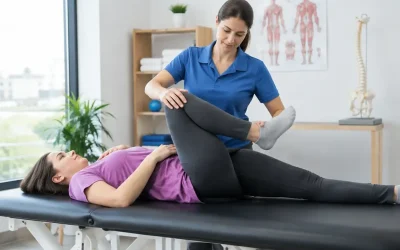
From your history and an exam, a clinician usually diagnoses PFPS rather than relying on one scan. The usual clinical pattern combines pain around or behind the patella, reproduction of pain with a squat or another functional knee-bending task, and exclusion of other knee conditions.
Among reported clinical tests, a squat is the most painful, with a sensitivity of 91%. A patella tilt test has the highest positive likelihood ratio (5.4) and a specificity of 92%. During the exam, your clinician may also watch how you walk, squat, or run and assess hip and knee movement.
X-rays are not routinely needed to diagnose PFPS. They may be used to rule out problems such as osteoarthritis, fracture, or osteochondritis when 4–8 weeks of conservative care have not helped. MRI is not a routine PFPS test because small cartilage changes or bone-marrow findings on MRI do not reliably match PFPS symptoms.
Rehab works best when you build hip and knee capacity together
Across the short, medium, and long term, exercise therapy has the strongest evidence for improving pain and function. International recommendations favor combining hip and knee exercises rather than doing knee exercises alone. In a 12-week study, quadriceps-focused and hip-focused programs improved symptoms and function to a similar degree, although neither reached the threshold for a minimal clinically important change.
Functional strength work has performed better than standard strength training for pain and function in PFPS. Because proprioception can be reduced in both the painful and nonpainful knee, rehabilitation can also include balance and movement-control training.
- Start within a pain-free range. Closed-chain work such as mini-squats places less patellofemoral load than open-chain work. The cited range is 0–40 degrees of knee flexion.
- Build hip and quadriceps strength. The goal is not to isolate one muscle forever; it is to improve how your leg handles loaded movement.
- Progress the task, not just the weight. A clinician can move from controlled exercise to the stairs, squat, walking, or running demands that matter to you.
For short-term relief, anti-inflammatory medicines such as ibuprofen can help, with an effect that appears limited to about 1 week. They should not be used to mask pain during sport. Joint mobilization, ultrasound, and TENS are not recommended treatments for PFPS.
Taping may help a task; a brace does not replace rehab
Patellar taping can be useful as an addition to exercise when it immediately makes a meaningful task more comfortable. For example, a clinician may compare stair climbing before and after taping. McConnell taping uses rigid tape to guide the kneecap from the outside toward the middle; kinesio tape may reduce pain but has not shown enough evidence that it corrects patellar alignment.
Evidence does not support routine taping for everyone, and braces have not shown an advantage over exercise therapy alone.
Return to running by managing load, not by waiting for a perfect knee
The joint has an individual load limit: when intensity or frequency goes beyond it, symptoms can appear. For a return to activity, a temporary reduction is usually followed by a gradual increase as symptoms and movement allow.
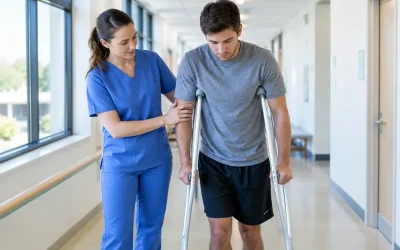
In a US Army study, activity restrictions of 14–19 days were associated with the highest likelihood of return, while longer restrictions of 30–32 days were common but not optimal. That result does not create a universal timeline. For your own progression, a physical therapist or orthopedic clinician can help judge whether dynamic valgus or reduced knee flexion needs attention.
For runners, training volume may matter more than strength symmetry alone. Replace running shoes after 300–400 miles to maintain cushioning and support. Continuing your exercises and load management after symptoms settle is a key factor for better long-term results.
Common PFPS myths can delay useful care
| Myth | What the evidence in this guide supports |
|---|---|
| “Cracking means I am damaging my knee.” | Crepitus is common and does not by itself signal serious damage. |
| “I need an MRI to know what is wrong.” | PFPS is primarily a clinical diagnosis; MRI findings do not reliably correlate with it. |
| “Rest alone will fix it.” | Exercise therapy has the strongest evidence for pain and function; continued load management supports better long-term results. |
| “A brace will solve the problem.” | Braces have not shown a benefit over exercise therapy alone. |
How long PFPS takes to heal varies. About half of people improve within weeks or gain control over symptoms within months, while symptoms can persist or recur for years in others. Persistent pain deserves reassessment rather than endless self-treatment. Surgery is rarely needed and is considered only in severe treatment-resistant cases with a clear surgical finding on imaging.
Frequently Asked Questions
What is runner’s knee?
Runner’s knee is the common name for patellofemoral pain syndrome: pain around or behind the kneecap that is aggravated by activities that load a bent knee. You do not have to be a runner to develop it.
What does PFPS stand for?
PFPS stands for patellofemoral pain syndrome. It refers to pain involving the joint between the patella and femur.
How can you make PFPS go away?
Exercise therapy, especially a combination of hip and knee work, and a gradual adjustment of activity load are the best-supported approaches. A clinician can tailor rehabilitation when pain persists or movement is difficult.
What exercises can help PFPS?
Hip and quadriceps strengthening, functional strength training, and balance or movement-control work can help. Mini-squats in a pain-free 0–40 degree range are one example of a lower-load closed-chain exercise; get individual guidance before progressing.
How long does PFPS take to heal?
Some people improve within weeks or manage symptoms within months, while others have persistent or recurrent symptoms. Keeping up exercise and load management after the acute phase supports better long-term results.
Can you prevent PFPS?
You may reduce risk by avoiding sudden jumps in training frequency, duration, or intensity; building hip and knee capacity; and addressing movement patterns that overload the joint. Get evaluated if swelling, redness, warmth, trauma, or persistent pain is part of the picture.